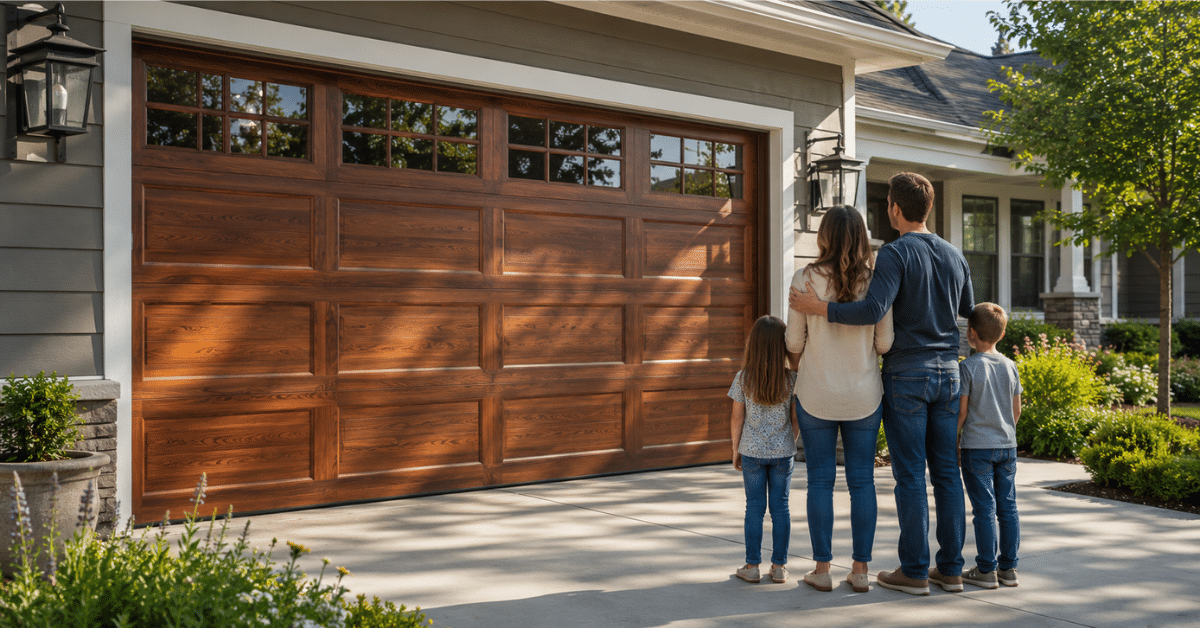
How long does a garage door last? It is one of the most practical questions a homeowner can ask — and the answer is more nuanced than any single number covers. The door itself, the springs, the rollers, the opener, and the weatherstripping all have different lifespans. Climate, maintenance frequency, usage patterns, and material choice all shift those numbers significantly. This guide breaks down the realistic lifespan of every garage door component, what shortens each one, and what you can do to push your door’s useful life as far as it will go.
How Long Does a Garage Door Last?
The door panels — the sections that make up the visible face of your garage door — are the longest-lasting component in the system when properly maintained. Manufacturers typically cite a range of 15 to 30 years for residential garage door panels. That range is wide because material choice makes an enormous difference.
Steel Doors
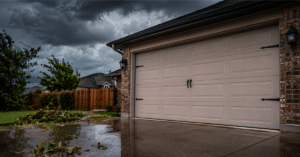
Steel is the most common residential garage door material and delivers a solid balance of durability and affordability. A well-maintained steel door lasts 20 to 30 years in temperate conditions. In Texas, that range shifts downward without proactive care — UV exposure degrades paint and protective coatings, heat causes panel expansion and contraction that fatigues joints over time, and hail can cause structural denting that shortens the door’s functional life unpredictably.
Keeping steel doors painted and sealed, addressing any coating damage promptly, and maintaining all mechanical components extends panel life toward the upper end of that range even in harsh Texas conditions.
Wood Doors
Wood garage doors are the most aesthetically striking option and the highest-maintenance one. Untreated or poorly maintained wood warps, cracks, and rots under Texas heat and humidity. A well-maintained wood door with regular sealing, painting, and inspection realistically lasts 15 to 20 years. Neglected wood doors in Central Texas can show serious deterioration in under a decade.
If you choose wood, commit to the maintenance. The payoff in curb appeal is real — but so is the cost of skipping it.
Aluminum Doors
Aluminum resists rust and handles coastal humidity better than steel. However, aluminum dents more easily and is not the strongest choice in high-hail zones. In appropriate environments — particularly coastal or humid areas — aluminum doors last 20 to 25 years with standard maintenance.
Fiberglass and Composite Doors
Fiberglass and composite doors offer the best resistance to moisture, warping, and corrosion. In Texas coastal environments, they consistently outlast steel and wood. Realistic lifespan: 25 to 30 years with minimal maintenance beyond periodic cleaning and hardware servicing.
How Long Do Garage Door Springs Last?
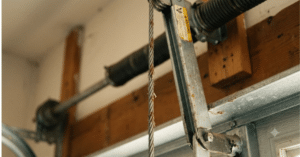
Springs are the component with the shortest and most predictable lifespan in the entire garage door system. Understanding spring lifespan is critical because a failed spring makes the door completely inoperable — and the failure almost always comes without warning.
Torsion Spring Lifespan
Standard residential torsion springs are rated for 10,000 cycles. One cycle equals one complete open-and-close operation. For a household that uses the garage door four times per day, 10,000 cycles translates to roughly seven years. For a family using the door eight or more times daily — common in active households where the garage is the primary entry point — that same spring reaches its cycle limit in three to four years.
Higher-cycle springs rated for 20,000 or 25,000 cycles are available and cost more upfront, but they more than recover that cost difference in extended service life and fewer emergency replacements.
Extension Spring Lifespan
Extension springs — the springs that run parallel to the horizontal tracks on each side — carry the same 10,000-cycle standard rating. However, they work under different mechanical stress than torsion springs and tend to show wear signs more visibly: stretching, coil gaps, and visible fatigue along the spring body.
In Texas, thermal cycling between extreme summer heat and winter cold snaps accelerates spring fatigue beyond what cycle count alone predicts. Spring inspection every three to four years is appropriate for Central Texas households regardless of cycle estimates.
Garage Door Spring Replacement New Braunfels
How Long Does a Garage Door Opener Last?
A garage door opener motor unit typically lasts 10 to 15 years under normal residential use. Several factors push that number in either direction.
What Shortens Opener Life
Opener motors in Texas garages face a specific challenge: ambient temperature. A garage that reaches 120 to 130°F in summer heat forces the opener motor to operate in conditions well above its design temperature rating. The motor generates additional heat during operation and relies on ambient air to cool between cycles. In a superheated garage, that cooling never happens efficiently — the motor runs hotter per cycle, its internal components fatigue faster, and thermal overload trips become more frequent as the unit ages.
Doors with incorrect spring tension place additional load on the opener motor. A door whose springs have lost tension essentially weighs more as far as the opener is concerned — every cycle puts more demand on a motor that was sized for a properly balanced door.
What Extends Opener Life
Keeping garage temperature moderated through insulation reduces the thermal load on the opener significantly. Maintaining correct spring tension removes the extra mechanical load that aging springs impose on the motor. Lubricating the drive chain or screw periodically reduces mechanical resistance. And scheduling a professional performance check every few years catches force setting drift before the motor compensates by working harder than it needs to.
Garage Door Opener Replacement and Installation
How Long Do Rollers, Hinges, and Hardware Last?
The smaller components of your garage door system have their own distinct lifespans — and they wear on a different timeline than the door panels or opener.
Rollers
Standard steel rollers without sealed ball bearings last three to five years under normal residential use. Nylon rollers with sealed ball bearings — the upgrade option most professional installers recommend — last five to seven years and operate significantly more quietly than steel. In Texas heat, rollers running without adequate lubrication wear faster — lubrication burned off by summer heat leaves rollers dragging rather than rolling well before their rated lifespan is reached.
Replacing rollers is one of the least expensive and highest-impact maintenance repairs available. New rollers reduce noise, reduce wear on tracks and hinges, and reduce the load on the opener motor — benefits that extend the life of every component around them.
Hinges
Standard residential hinges last eight to fifteen years depending on use frequency and lubrication consistency. Heavier commercial-grade hinges — which some premium door brands include as standard — last significantly longer. Worn hinges develop play in their pivot pins, causing panel misalignment that progressively stresses tracks, cables, and the door’s overall squareness.
Weatherstripping and Bottom Seals
Weatherstripping is the shortest-lived component in the system — and the most frequently ignored. Bottom seals and side weatherstripping in Texas degrade under UV exposure and thermal cycling in two to four years. A cracked or hardened seal lets in heat, humidity, insects, and dust that raise garage interior temperatures and accelerate component wear across the board.
Replacing weatherstripping is inexpensive and takes minutes. Ignoring it costs far more in the secondary damage that a failed seal allows.
What Shortens a Garage Door’s Lifespan Fastest
Knowing the threats is as useful as knowing the averages. These four factors consistently shorten garage door lifespan beyond what normal wear alone would produce.
Lack of lubrication is the single most preventable cause of premature component failure. Dry rollers, hinges, and springs generate friction that wears components at two to three times the rate of properly lubricated systems. Lubricate every six months — quarterly in Texas heat.
Ignoring small problems is how minor roller wear becomes track damage becomes cable stress becomes opener failure. Each component in a garage door system affects the others. A problem caught at the roller stage costs a fraction of what it costs after it has cascaded.
Deferred spring replacement is the most dangerous form of ignored maintenance. Springs operating past their cycle rating are under fatigue stress with every use. They snap without warning — typically under peak load during the hottest days of the year. Proactive replacement on schedule is always safer and cheaper than emergency replacement after a snap.
Skipping professional tune-ups removes the only inspection that catches the wear patterns invisible to the untrained eye. Annual or semi-annual professional service consistently extends garage door system lifespan by identifying and correcting issues before they become failures.
International Door Association — residential garage door maintenance and lifespan standards
Frequently Asked Questions
Q: How long does a garage door last on average?
A: The door panels themselves last 15 to 30 years depending on material and maintenance — but springs, rollers, openers, and weatherstripping all have shorter individual lifespans that require replacement during the door’s life.
Q: How do I know when my garage door needs replacing versus repairing?
A: When multiple components fail simultaneously, the door is over 20 years old, panels cannot be matched for repair, or repair costs approach 50% of replacement cost — replacement typically delivers better long-term value.
Q: Do garage doors last longer with regular maintenance?
A: Yes — consistently maintained garage doors reach the upper end of their lifespan range while neglected doors in the same conditions fail significantly earlier, often by five to ten years.
Q: How long do garage door springs last in Texas heat?
A: Standard springs are rated for 10,000 cycles — roughly seven years at average use — but Texas thermal cycling accelerates fatigue, making three-to-four-year inspections appropriate for Central Texas households.
Q: What is the most important thing I can do to extend my garage door’s life?
A: Lubricate all moving parts every six months and schedule a professional tune-up annually — these two habits alone prevent the majority of premature component failures across the entire system.
Conclusion
How long does a garage door last? The door panels: 15 to 30 years by material. Springs: 7 to 10 years at standard use. Rollers: 3 to 7 years. Opener: 10 to 15 years. Weatherstripping: 2 to 4 years. Each component has its own clock — and in Texas, every one of those clocks runs faster without proactive maintenance. The homeowners who get the most life from their garage doors are the ones who lubricate consistently, catch problems early, and schedule professional service before failures happen rather than after. New Braunfels Garage Door provides expert tune-ups, component replacements, and full system inspections that keep your door running at its full potential — contact us today to schedule your service and protect the investment your garage door represents.