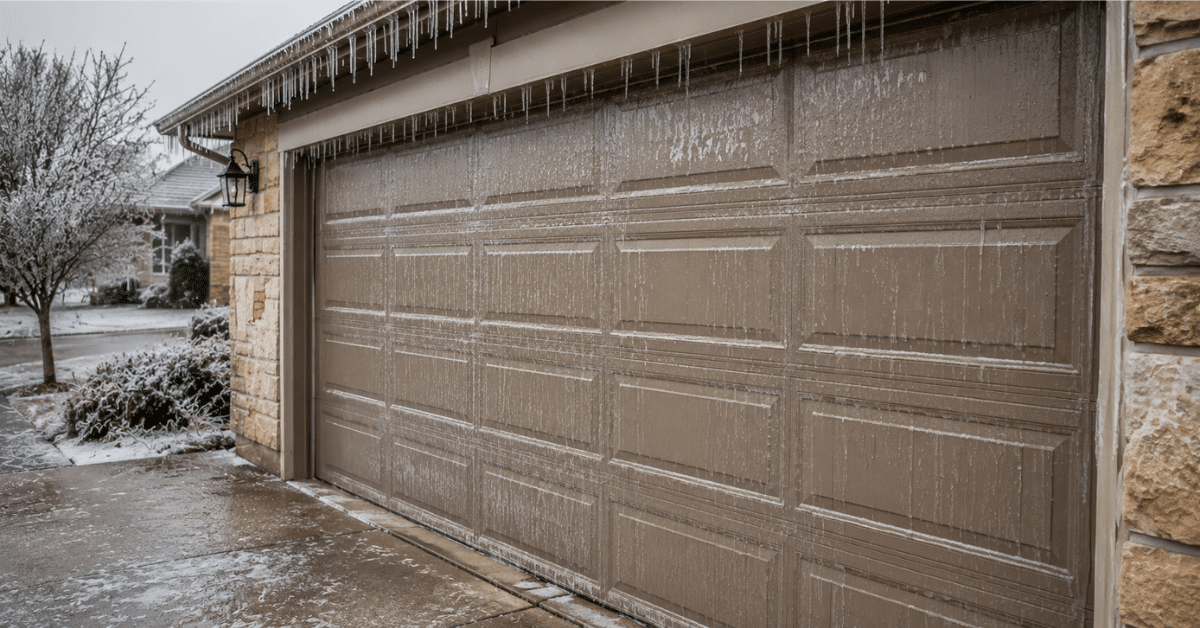
New Braunfels winters are deceptive. Mild stretches of 60°F weather can drop to freezing overnight — sometimes within hours. That rapid temperature swing is exactly what triggers the most common garage door problems New Braunfels winters produce. Unlike northern states where cold is consistent and predictable, Central Texas homeowners deal with freeze-thaw cycles that stress mechanical components in ways that steady cold never would. This guide covers every winter garage door problem specific to this climate, why each one happens, and what to do about it before a cold snap turns into a breakdown.
Why New Braunfels Winters Are Uniquely Hard on Garage Doors
Most garage door maintenance guides are written for northern climates where winter means sustained cold. New Braunfels is different — and that difference matters mechanically.
Central Texas winters deliver rapid freeze-thaw cycling rather than sustained freezing temperatures. A garage door that sits in 28°F air overnight and then absorbs afternoon sun pushing temperatures back to 65°F has experienced one full thermal cycle in under 12 hours. Metal contracts in the cold and expands in the warmth. Lubricants thicken overnight and thin out by afternoon. Rubber seals harden in the freeze and soften in the warmth — cycling through that stress repeatedly without recovery time.
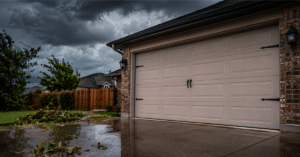
The February 2021 winter storm demonstrated how vulnerable Texas garage door systems are to prolonged freezing. Many homeowners discovered their doors were frozen shut, their springs had snapped under cold-stiffened tension, and their openers were struggling against resistance they were never designed to handle. Understanding these vulnerabilities before the next cold event is the only preparation that actually helps.
Problem #1 — Frozen Bottom Seal
The most immediate and most common winter garage door problem in New Braunfels is a door frozen to the ground. When moisture — from rain, condensation, or ground frost — seeps under the garage door and temperatures drop overnight, that moisture freezes and bonds the rubber bottom seal to the concrete floor.
What It Looks Like
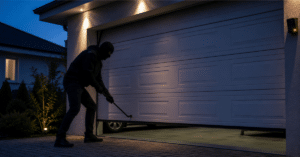
The opener strains, the motor hums, and the door does not move. Homeowners who force the door open — by running the opener repeatedly or pulling the emergency release and yanking manually — risk tearing the bottom seal, damaging the door panels, stripping the opener’s drive gear, or burning out the motor.
The Right Fix
Do not force it. Instead, pour warm water along the bottom seal to melt the ice bond — not boiling water, which can crack cold concrete and damage the seal. A heat gun on a low setting works as well. Once the seal releases, dry the threshold area and inspect the seal for tears or hardening that made it more vulnerable to freezing.
Applying a silicone-based lubricant to the bottom seal before temperatures drop prevents the bond from forming in the first place. This single preventive step eliminates the most common winter garage door emergency New Braunfels homeowners face.
Problem #2 — Spring Failure in Cold Weather
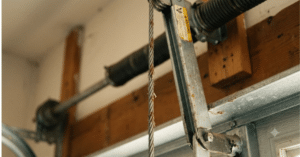
Torsion springs snap more frequently in cold weather than in any other season — and New Braunfels’s freeze-thaw cycling makes spring failure a specific winter risk rather than a random event.
Cold temperatures cause metal to contract and become more brittle. A spring that has accumulated wear through thousands of summer cycles enters winter already fatigued. The additional brittleness from cold, combined with the mechanical shock of operating in contracted, stiffened conditions, pushes worn springs past their failure threshold. The result is a loud bang — the sound of the spring snapping — followed by a door that cannot be safely operated in any direction.
Recognizing the Warning Signs
Springs do not snap without precedent. The warning signs appear weeks or months before failure: a door that feels heavier when lifted manually, a visible gap in the torsion spring coil, the door moving unevenly with one side lower than the other, or squeaking and groaning sounds during operation that lubrication does not silence.
Catching these signs before a hard freeze and scheduling spring replacement in October or November prevents the emergency that otherwise happens at 7 a.m. on the coldest morning of the year.
Garage Door Spring Replacement New Braunfels
Problem #3 — Thickened Lubricant and Increased Friction
Standard garage door lubricants are formulated for a temperature range that does not account for Texas freeze events. When temperatures drop below freezing, standard lubricants thicken significantly — sometimes to the consistency of paste. Thickened lubricant no longer flows freely between moving parts. Instead, it resists movement, increases friction, and forces the opener motor to work harder than its force settings were calibrated for.
The result is a door that moves sluggishly, a motor that strains audibly under the added resistance, and accelerated wear on rollers, hinges, and the drive mechanism during every winter operation cycle.
The Fix
Switch to a low-temperature or all-season silicone-based lubricant before winter arrives. These formulations maintain appropriate viscosity through the temperature range that New Braunfels winters produce — including the hard freeze events that occur every few years. Apply fresh lubricant to rollers, hinges, torsion spring coils, and bearing plates in October or November before the first cold front arrives.
Do not use WD-40 as a winter lubricant substitute. It displaces moisture in the short term but evaporates quickly and leaves components dry — exactly the opposite of what cold weather requires.
Problem #4 — Opener Struggling or Failing in Cold
Garage door opener motors are tested and rated at standard temperatures. In a garage that drops to 20°F or below during a hard freeze event, the motor operates outside its optimal thermal range. Cold thickens the grease inside the motor housing, stiffens the drive chain or belt, and reduces the motor’s effective torque output at the moment it is already fighting increased resistance from cold-stiffened springs and thickened component lubricants.
The combination of reduced motor output and increased mechanical resistance creates a situation where openers that worked fine in October struggle to complete a full cycle in January.
Opener Force Settings in Winter
Most garage door openers have adjustable force settings. A setting calibrated for summer conditions may be insufficient for winter resistance levels. A professional can adjust force settings seasonally — increasing close and open force slightly for winter operation and returning to standard settings in spring.
However, never simply maximize the force setting as a winter fix. If the door is genuinely frozen to the ground or a spring has failed, forcing the opener at maximum power causes motor damage, gear stripping, and in some cases structural door damage. Address the root cause first.
Garage Door Opener Repair and Service
Problem #5 — Contracted Tracks and Misalignment
Metal tracks contract in cold temperatures. While the contraction in a typical New Braunfels freeze event is small in absolute terms, it is enough to shift track alignment when combined with mounting hardware that has loosened from a full year of thermal cycling. A track that sits at the correct width and plumb in summer may narrow slightly in a hard freeze — creating roller binding, jerky travel, and in some cases the door stopping mid-travel when the opener’s obstruction detection triggers.
This problem is most noticeable during the first hard freeze of the season — before the tracks have had time to equilibrate to the new temperature. The door may operate normally for a few weeks of mild winter weather, then start binding when temperatures drop sharply.
Prevention
Annual hardware tightening before winter — checking every track mounting bracket and ensuring all bolts are snug — removes the looseness that cold-weather contraction exploits. A track that is solidly mounted has far less room to shift when metal contracts.
Problem #6 — Weatherstripping Cracking and Seal Failure
New Braunfels’s freeze-thaw cycling is particularly destructive to rubber weatherstripping and side seals. Rubber hardens in the cold, softens in the warmth, and degrades faster through repeated cycling than it would under sustained cold or sustained heat alone. Side seals and top weatherstripping that survived summer in adequate condition often crack their first significant freeze — letting cold air, moisture, and eventually pests into the garage.
A compromised seal raises garage interior temperatures significantly during cold snaps — stressing the opener motor, thickening lubricants faster, and in attached-garage homes, raising heating costs for adjacent living spaces.
Inspect all weatherstripping in October before the first cold front. Replace any section that shows cracking, hardening, or gaps. Weatherstripping replacement is inexpensive and fast — and it prevents a cascade of secondary problems when winter arrives.
National Weather Service Austin/San Antonio — Central Texas winter freeze forecast data
Frequently Asked Questions
Q: Why does my garage door not open in cold weather?
A: Cold thickens lubricants, stiffens springs, and can freeze the bottom seal to the ground — all of which increase resistance beyond what the opener’s standard force settings can overcome.
Q: How do I prevent my garage door from freezing shut in winter?
A: Apply silicone-based lubricant to the bottom seal before temperatures drop and clear any standing water from the threshold area — these two steps prevent the ice bond that freezes the door to the ground.
Q: Do garage door springs break more often in winter?
A: Yes — cold temperatures make metal more brittle, and springs already fatigued from summer cycles are significantly more likely to snap during freeze events than in warm weather.
Q: Should I leave my garage door open or closed during a freeze?
A: Always closed — a closed door protects mechanical components from direct exposure to freezing air, retains any heat the garage holds, and prevents pipe freezing in garages with plumbing.
Q: How often should I lubricate my garage door in winter in New Braunfels?
A: Apply a fresh coat of all-season silicone lubricant in October before the first cold front — and reapply after any extended freeze event that lasts more than two or three days.
Conclusion
Garage door problems in New Braunfels winters follow a predictable pattern — frozen seals, snapped springs, thickened lubricants, struggling openers, contracted tracks, and cracked weatherstripping. Every one of these problems is either preventable or significantly less damaging when caught before the freeze rather than during it. The preparation window is October and early November — before the first hard cold front arrives and before worn components meet their winter breaking point. New Braunfels Garage Door provides pre-winter tune-ups that address every one of these vulnerabilities in a single service visit. Contact us today to schedule your inspection and head into winter with a garage door system that is genuinely ready for whatever the Central Texas sky delivers.