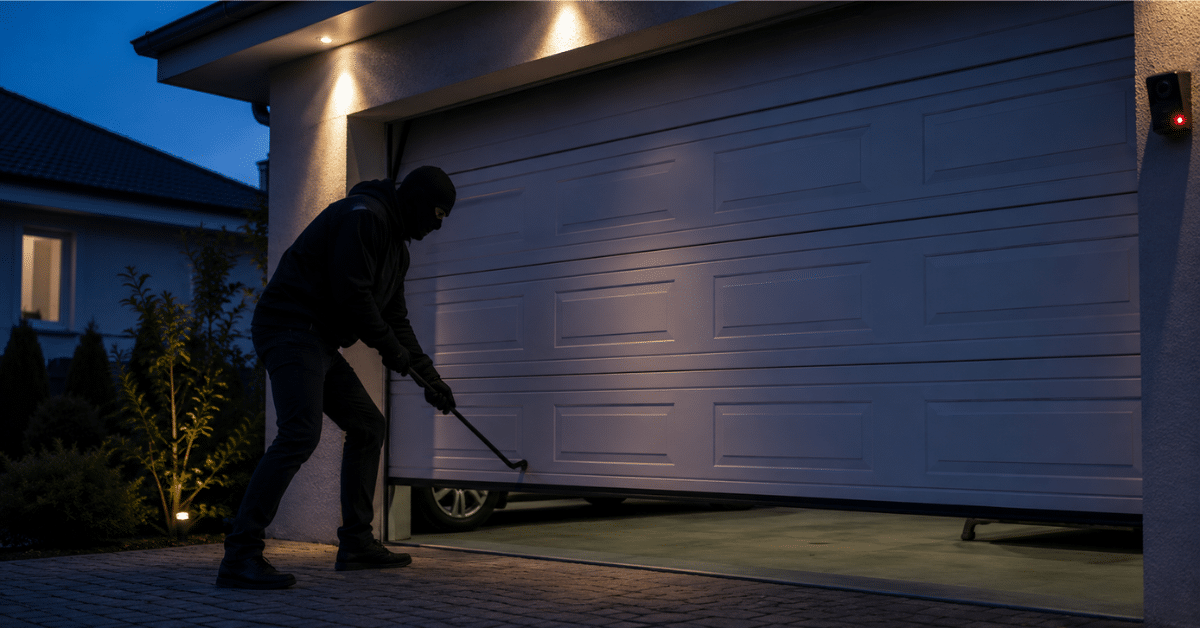
Most homeowners put real thought into their front door deadbolts, window locks, and porch cameras. However, one entry point consistently gets overlooked, and burglars know it. Understanding how burglars target garage doors is the first step toward closing a vulnerability that exists on millions of homes across the country, including right here in New Braunfels.
The garage door isn’t just a convenience feature. For many homes, it’s the widest, least-secured entrance on the entire property. Once you understand the specific methods intruders use, protecting your home becomes a lot more straightforward.
Why the Garage Door Is a Burglar’s First Choice
Burglars don’t choose targets randomly. They look for homes that offer the easiest access with the least risk of being seen or heard. The garage door checks nearly every box on that list.
For starters, garage doors are mechanical. Unlike a solid wood front door with a steel frame and a deadbolt, a garage door depends on a motor, sensors, and hardware that can wear down, loosen, or be manipulated far more easily. Many homeowners also forget that the garage typically connects directly to the home’s interior through an interior door, often one with a weaker lock than the front entrance.
Additionally, the garage is usually positioned on the side or rear of the house, away from street view. A burglar working on a garage door is far less exposed than one standing at the front porch. That combination of easy access and low visibility makes it an appealing first target.
What’s the Best Garage Door for Security?
How Burglars Target Garage Doors: The Most Common Methods
The Emergency Release Hack
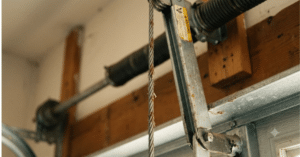
One of the most widely used techniques is surprisingly simple. Most garage doors have an emergency release cord that disconnects the door from the motor, allowing it to be opened manually during a power outage. The problem is that this cord hangs near the top of the door, and the gap between the door and the frame is often wide enough to slip a thin wire or coat hanger through.
A burglar hooks the release cord, pulls it, and the door lifts freely by hand in seconds. This method requires no tools, no noise, and no special knowledge. It works on a large percentage of standard residential garage doors.
Code Grabbers and Signal Cloning
Older garage door openers, particularly those more than 10 to 15 years old, use a fixed radio frequency code that never changes. Burglars can use inexpensive electronic devices to capture that signal when you press your remote and replay it later to open the door themselves.
Newer openers use rolling code technology, which generates a fresh code every time the remote is pressed, making signal cloning essentially useless. If your opener is older, this vulnerability alone is worth upgrading over.
Brute Force Entry
Not every break-in is high tech. Some burglars simply apply force to the bottom of the door with a crowbar or their hands, especially when the door sits loosely in its tracks or the hardware is corroded and weak. A door that wobbles, sticks, or has visible track damage is a signal to an observant burglar that the home hasn’t been maintained, which usually means the security side hasn’t been thought about either.
The Overlooked Side Door
Many garages have a secondary entry door on the side or back. This door is frequently treated as an afterthought and may have nothing more than a basic knob lock, no deadbolt, and no camera coverage. Burglars often skip the main garage door entirely and go straight for this weaker point.
Watching and Waiting
Before acting, many experienced burglars scout a neighborhood for patterns. A garage door left open during the day, a regular schedule of the house being empty, or a car always parked outside rather than inside the garage all serve as signals. Predictability is a security risk on its own.
Step-by-Step Ways to Secure Your Garage Door
Now that you understand how burglars target garage doors, the fixes become clear. Most of them are affordable, and several take less than an hour to put in place.
Protect the emergency release cord. You can purchase a simple emergency release shield that prevents a wire from reaching the cord through the door gap. Some homeowners also use a zip tie to make the cord harder to pull with a hook, while still allowing it to break free in a genuine emergency.
Upgrade to a rolling code opener. If your opener predates 2010, upgrading to a modern rolling code model is one of the most effective single steps you can take. Most current openers from major brands already include this feature as standard.
Install a slide bolt or manual lock. A manual slide lock on the inside of the garage door adds a physical barrier that no remote or code grabber can defeat. This is especially useful when you’re away from home for several days.
Secure the side entry door properly. Install a solid deadbolt on any secondary garage door and treat it with the same seriousness as your front entrance. Add a peephole or small window so you can see who’s outside before opening.
Add motion-activated lighting. Visibility is a burglar’s biggest deterrent. A bright motion light mounted above the garage door eliminates the cover of darkness and makes your home a far less appealing target compared to a darker house nearby.
Install a camera or video doorbell near the garage. Even a basic camera pointed at the driveway and garage area creates a record and, more importantly, signals to anyone scoping the property that they’re being watched.
Never leave the door open unattended. It takes seconds for someone to slip inside an open garage. Get into the habit of closing the door immediately after entering or exiting, even for a quick errand.
Schedule a professional inspection. Worn tracks, loose hardware, and misaligned sensors all make a garage door physically easier to force open. A professional technician can spot and fix these issues quickly before they become a security problem.
U.S. Department of Homeland Security home security guide
Why Routine Maintenance Is a Security Issue Too
Most people think of garage door maintenance as purely a mechanical concern, fixing a noisy spring or a slow opener. However, a poorly maintained door is also a less secure door. Loose tracks create gap vulnerabilities. Worn springs mean the door doesn’t sit flush when closed. Sensors that don’t work properly may not detect tampering.
Keeping your garage door in good mechanical condition is directly tied to how well it holds up against forced entry. An annual inspection from a local garage door professional isn’t just about performance — it’s a security measure as much as anything else.
If it’s been more than a year since your door was professionally serviced, now is the right time to schedule a visit. Small issues are far cheaper and easier to address before they become the gap a burglar walks through.
Conclusion
Knowing how burglars target garage doors gives you a real advantage. Most break-ins through garages happen because of easily preventable weaknesses: an exposed release cord, an outdated opener, a flimsy side door, or hardware that’s never been checked. Closing those gaps doesn’t require a major investment — just the right information and a few practical steps.
If you’re in New Braunfels and want to make sure your garage door isn’t the weak link in your home security, our team is ready to help. From hardware upgrades to full inspections, we’ll make sure your door is working exactly the way it should.
FAQ
Q: How exactly do burglars target garage doors using the emergency release?
A: They slide a thin wire through the gap above the door, hook the release cord, and pull it to disconnect the door from the motor. A release shield or cord cover prevents this method from working.
Q: Does a rolling code opener really stop code grabbers?
A: Yes. Rolling code openers generate a new signal every time the remote is used, so even if a burglar captures the previous code it becomes useless immediately after.
Q: How do I know if my garage door hardware is weak enough to force open?
A: If the door rattles, sits unevenly in the tracks, or has visible rust or damage on the hinges and brackets, it’s worth having a technician inspect it. Loose hardware is one of the easier vulnerabilities for burglars to exploit.
Q: Is the interior door between my garage and house important for security?
A: Absolutely. That door should have a solid core, a deadbolt, and ideally a peephole. It’s your second line of defense if someone does get into the garage.
Q: How often should a garage door be professionally inspected for security and function?
A: Once a year is the standard recommendation, with a mid-year visual check by the homeowner for obvious signs of wear, misalignment, or damage.